
Using Proxies to Bypass Geo-Blocking Legally in 2026
TL;DR: Using proxies to bypass geo-blocking legally requires checking applicable law, site terms, and your authorization before accessing regional content; a local IP does not grant permission. Use a controlled research session to verify location signals, document regional differences, and stop at access denials.
Geo-blocking limits access based on location signals, often an IP address. A proxy routes requests through another IP, which can change the regional content a website displays. For marketers researching local pricing, promotions, or search results, the workflow below separates authorized localization testing from attempts to circumvent paywalls, account restrictions, or other access controls.
Understanding Geo-Blocking
A website can use your apparent location to deny access or display a regional version of its content. For market research, those are different outcomes: a location-related refusal is an access restriction, while a different currency or catalog may simply be localization. Classify the response before deciding whether a proxy is appropriate.
Classify the research obstacle
Record the page’s actual behavior, not just whether its content differs from your usual view. A storefront showing local shipping options presents a different research problem from a page refusing access. An account entitlement is a separate boundary that a regional IP cannot satisfy.
- Access restriction: The page displays a location-related refusal rather than the requested content.
- Localization: The page remains accessible but changes language, pricing, availability, or messaging.
- Account restriction: Access requires credentials or an existing entitlement.
Record the URL, displayed message, login state, and research purpose. Treat permission to access the content as a separate question from whether a proxy can change its apparent location.
Legal Considerations When Using Proxies
Proxy access can be lawful, but its legality depends on the jurisdiction, authorization, content, and restriction involved. Site terms also require a separate review: contractual permission and legal compliance are not interchangeable. Viewing an authorized regional storefront is different from defeating authentication or accessing licensed material without the required entitlement.
Before researching a market, document the target pages, applicable terms, research purpose, and any written authorization. If terms prohibit proxy access or automated collection, request permission or use an approved API.
Review requirements in your operating jurisdiction and the target market with counsel where needed. Keep research focused on necessary fields such as prices, promotions, and availability. If access triggers an unexpected login requirement or explicit denial, stop and seek an authorized route.
Choosing the Right Proxy for Geo-Blocking
Choose a proxy based on the required location, protocol compatibility, and session behavior—not promises of anonymity or universal access. EProxies offers 72M+ residential IPs across 195+ countries and supports HTTP(S) and SOCKS5. Confirm any finer targeting, authentication method, and session-duration requirements for your selected product before configuring a regional research workflow.
| Proxy option | Research fit | Trade-off to check |
|---|---|---|
| Rotating residential | Separate, permitted regional checks | Changing exit IPs can disrupt comparisons; rotation does not guarantee anonymity. |
| Sticky residential | Comparing localized prices, ads, and landing pages | Confirm session availability and duration; continuity does not eliminate cookie-based personalization. |
| ISP SOCKS5 | Workflows requiring SOCKS5 compatibility | Test compatibility with your client; SOCKS5 alone does not encrypt traffic. |
For repeat observations of a storefront, prefer a consistent exit location and session where available. Verify the assigned IP rather than assuming the requested location matches every website’s geolocation database.
Provider uptime and target access are different measurements. EProxies reports 98.2% uptime, backed by a 99.9% uptime SLA; neither figure guarantees that a particular website will accept a request or display the intended regional content.
Step-by-Step Guide to Bypassing Geo-Blocking Legally
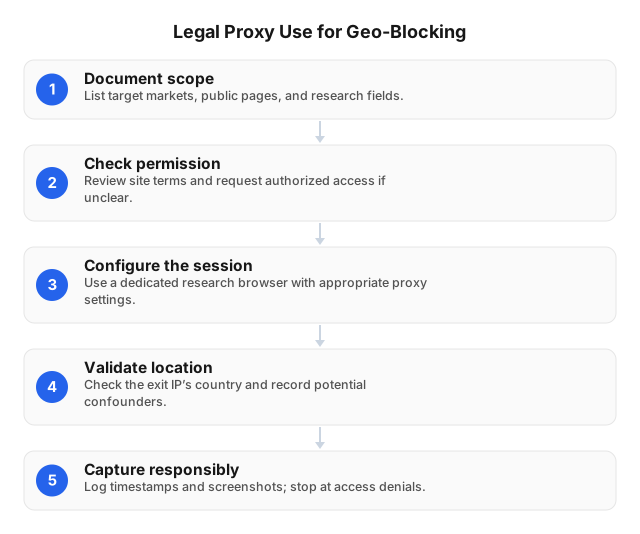
Start by defining authorized access, then configure and validate the regional connection. A working proxy proves only that a request reached the target through another IP; it does not establish permission or location accuracy. Keep connection diagnostics separate from the research record so authentication failures do not become mistaken market observations.
- Document scope. List approved domains, target markets, public pages, and research fields, such as currency, shipping availability, and promotional copy.
- Check permission. Review site terms and company policy. Request authorized access when permission is unclear.
- Configure the client. Use a dedicated research browser profile or approved HTTP client. Enter the endpoint, port, protocol, and authentication details supplied for your selected proxy product.
- Validate location. Check the exit IP’s apparent country, then record browser language, cookies, and account region as potential confounders.
- Capture responsibly. Log timestamps and screenshots. Stop at access denials rather than escalating workarounds.
Configuration check before collecting data
Validate the connection separately from the target page so you can distinguish setup errors from regional behavior. In an approved research profile, use the provider-supplied settings and check the exit IP through an organization-approved diagnostic service. Then open an authorized target page without changing the session or browser state.
Use this test sequence:
- Confirm the connection. If proxy authentication fails, inspect the supplied credentials and client settings before requesting the target again.
- Check the exit location. Compare the requested country with the diagnostic result. Treat disagreement as a reason to investigate, not proof that the target is wrong.
- Inspect the regional page. Record displayed currency, shipping destination, language, and any location-related message.
- Identify confounders. If the exit country changes but the storefront does not, check saved cookies, account-region settings, and explicit delivery-country selections.
- Preserve context. Save the browser-state notes alongside the screenshot. Do not attribute a difference to geography unless the other relevant settings are controlled.
For campaign-specific checks, use the workflow in How to Set Up Geo-Targeted Ad Campaigns with Proxies.
Common Mistakes to Avoid
The most damaging mistake is treating successful access as evidence of permission or an accurate regional result. A page can load while still reflecting saved account settings, and a connection can fail without indicating geo-blocking. Diagnose the response, preserve browser context, and avoid using aggregate success figures as guarantees for your target.
Changing IPs mid-session can distort comparisons. Keep the location consistent while reviewing a storefront, and record currency, language, login status, and cookie state alongside screenshots. Otherwise, personalization may look like a regional pricing difference.
Repeatedly retrying a denied request is not a compliance strategy. Pause collection and seek an approved API, licensed dataset, or written permission rather than rotating identities around an access control.
Keep proxy credentials out of research spreadsheets and screenshots. Store secrets in your organization’s approved credential manager and share configuration instructions separately.
Ethical Implications of Bypassing Geo-Blocking
Ethical proxy research requires permission, proportionate collection, and honest interpretation of results. An authorized regional storefront check differs from impersonating customers, collecting unnecessary personal data, or overriding an explicit denial. Residential proxy sourcing also matters: ask how IP participants consent and whether the provider can explain how its network is obtained.
Define approved domains, permitted pages, required fields, and deletion criteria before connecting. For a pricing study, retain product prices, currency, shipping conditions, and observation dates; exclude reviewer identifiers and account details unless explicitly necessary and authorized.
Separate research sessions from purchasing accounts. Avoid ad clicks that spend an advertiser’s budget, and label proxy-based observations rather than presenting them as verified local customer behavior. Collect only what the research requires, and stop when the target denies access.
Illustrative Authorized Research Scenarios
The examples below describe permission-based workflows, not verified customer case studies or measured results. Success means obtaining an authorized regional view and preserving enough context for another researcher to interpret it. A screenshot without the exit location, browser state, or permission record is weak evidence of a market difference.
Agency checking a client’s regional storefront
Written client approval provides a basis for testing the client-controlled storefront within the agreed scope. The agency uses an appropriate regional connection and records the exit country, currency, promotional copy, and screenshot. If the task reaches customer accounts or third-party content, the researcher checks that additional access is authorized before proceeding.
Researcher reviewing a partner’s local catalog
An agreed research scope lets the marketer inspect the partner’s regional catalog without treating all reachable content as available for collection. The researcher keeps the session consistent and records product availability and shipping conditions. An explicit denial ends the check; additional access requires renewed permission rather than repeated IP changes.
Related reading
Use these guides for jurisdiction-specific planning and for understanding why a target may reject proxy traffic. Neither replaces permission from the site or a legal review of your project. Read the regional guidance before configuring access, and use the detection guide to interpret failures rather than justify circumventing them.
FAQ
Permission, location accuracy, and data handling determine whether a proxy-based research workflow is appropriate. A regional IP addresses only one of those questions. Before collecting prices, ads, or landing pages, establish the permitted scope and record the settings that could influence the result, including cookies, language, and account region.
What is geo-blocking and why is it used?
Geo-blocking restricts access based on a visitor’s apparent location, often to enforce licensing, distribution, or regulatory requirements. Websites can use an IP address as a location signal. Different currencies or catalogs may instead reflect localization, so record content differences separately from explicit access refusals.
Is it legal to bypass geo-blocking with proxies?
Bypassing geo-blocking with proxies is legal only where the access complies with applicable law; authorization and the restriction involved must also be assessed. A proxy does not grant rights to cross login barriers, paywalls, or other access controls. Review site terms separately from legal requirements, and seek legal advice when licensing, personal data, or explicit access prohibitions affect the project.
How do I choose a proxy for bypassing geo-blocking?
Choose a proxy for authorized research based on location coverage, session consistency, protocol compatibility, and documented data-handling practices. EProxies supports HTTP(S) and SOCKS5 and offers 72M+ residential IPs across 195+ countries. Confirm finer targeting and session options for your selected product, then verify the assigned IP’s location before capturing results.
What are the risks of using proxies for geo-blocking?
Proxy use can create legal or contractual exposure, account restrictions, credential leaks, and misleading regional observations. Cookies, account settings, language preferences, and device permissions can influence content even when the exit IP changes. Use an approved research profile, retain HTTPS, protect credentials, and stop at explicit access denials.
Are there ethical concerns with bypassing geo-blocking?
Yes—ethical concerns include disregarding access restrictions, collecting unnecessary personal data, burdening websites, and using residential IPs without meaningful participant consent. Limit collection to authorized research fields and ask the provider how network participants consent. Preserve location and session context so colleagues do not mistake a proxy-based observation for a universal market fact.
This article was written by the EProxies team and reviewed against our editorial quality standards before publishing.