
Is Mobile App Data Scraping Legal? 2026 Compliance Guide
TL;DR: Scraping mobile app data legality and practices depend on authorization, data type, jurisdiction, app terms, collection method, and intended use; public access alone does not eliminate privacy, contract, intellectual-property, database-right, or computer-misuse risk.
This guide is for legal compliance officers reviewing mobile API collection, app-interface extraction, traffic analysis, or automated account access in 2026. It provides a jurisdiction-by-jurisdiction framework for classifying data, documenting lawful grounds, evaluating consent and contractual restrictions, and escalating projects that involve personal data, authentication, technical controls, or cross-border transfers.
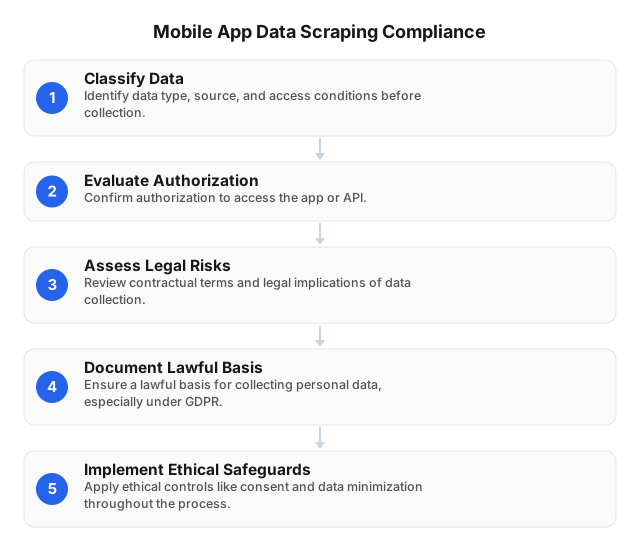
Introduction to Mobile App Data Scraping
Mobile app data scraping is the automated collection of information exposed through an app’s interface, network responses, public API, or app-store listing; its legality varies by jurisdiction, data type, access method, contractual terms, and intended use, so no single “publicly visible” test resolves compliance.
Unlike conventional website scraping, app collection may involve observing API traffic, extracting rendered content, or gathering public listing metadata. Each method creates a different authorization record and can implicate privacy, contract, copyright, or computer-access rules.
The controlling compliance question is not whether automation was used, but what data was obtained, how access occurred, and what happened to the data afterward.
A public product price presents a different risk profile from account-only location data or user identifiers. Terms of Service may prohibit automated collection even where information is viewable, while consent and transparency duties can follow personal data across borders. Compliance officers should therefore classify the source, access conditions, data subjects, and processing purpose before approving collection.
Understanding the Legal Landscape
Mobile app data scraping is not inherently illegal, but legality turns on three separate questions: whether the collector was authorized to access the app or API, whether contractual terms prohibit automated collection, and whether the captured or reused data triggers privacy, copyright, or computer-access law. Public visibility alone is not a compliance safe harbor.
The United States has no single scraping statute. Unauthorized access may create exposure under the Computer Fraud and Abuse Act, while breached app terms can support contractual claims even when data is publicly visible. Circumventing authentication or technical controls materially increases risk.
For EU users, personal-data collection invokes GDPR duties, including a documented lawful basis, transparency, purpose limitation, data minimization, retention controls, and rights handling. Compliance officers should review EU scraping guidance before collection, then assess downstream use separately from initial access.
Jurisdictional Differences in Scraping Laws
Mobile app scraping laws differ by jurisdiction, and public visibility alone does not establish legality. A compliance review must map the operator’s location, users’ locations, collection method, app terms, data type, and downstream use before extraction begins; cross-border projects may trigger several legal regimes simultaneously.
| Jurisdiction | Governing considerations | Required compliance action |
|---|---|---|
| United States | No single scraping statute applies. CFAA exposure increases when collection exceeds authorized access; contract, privacy, copyright, and app Terms of Service may create separate claims. | Confirm authorization, avoid access controls, and assess federal and state law independently. |
| EU/EEA | GDPR duties can attach when records identify or relate to people. Public access does not remove lawful-basis, transparency, minimization, retention, or data-subject-rights requirements. | Complete a purpose-and-lawful-basis assessment and review member-state database and copyright rules. |
| Cross-border operations | Laws may follow users, operators, processing locations, or data destinations. | Apply the strictest applicable control and document transfer mechanisms and conflicts. |
See the detailed country-by-country scraping law guide.
Ethical Considerations in Mobile App Data Scraping
Mobile app data scraping is ethically defensible only when user consent is meaningful and data privacy survives the entire workflow—from collection through deletion. Treat two controls as mandatory: document a clear purpose before collection, and collect only fields necessary for that purpose. Public visibility alone does not establish ethical permission.
Consent must be specific, informed, and revocable. An app publisher’s approval does not automatically represent its users’ consent, especially for secondary uses such as profiling or model training. Avoid collecting device identifiers, precise location, contacts, private messages, authentication tokens, or other sensitive fields unless the approved purpose requires them.
Privacy controls should cover minimization, pseudonymization, access permissions, retention deadlines, deletion requests, and downstream recipients. Maintain field-level provenance so compliance teams can identify where each value originated and remove it when consent changes. Lawful collection can still be unethical if users would reasonably reject the undisclosed use.
Best Practices for Legal Compliance
A compliant mobile app scraping program starts with three controls: documented authorization, a lawful basis for each personal-data field, and collection limits that protect the app. Compliance requires both legal review and ethical safeguards; public visibility alone does not settle privacy, contract, copyright, or authorized-access risk.
- Map the data flow. Record each field, source endpoint, collection country, storage location, recipient, purpose, and retention period.
- Review access rights. Check app terms, API licenses, robots directives, authentication boundaries, and written permissions; never circumvent technical access controls.
- Establish a lawful basis. Document consent, contractual necessity, or another applicable basis before collecting personal data, including identifiers and location data.
- Minimize collection. Exclude unnecessary fields, sensitive data, minors’ data, and records unrelated to the approved purpose.
- Control operations. Apply rate limits, monitor app impact, restrict employee access, honor deletion requests, and reassess cross-border transfers whenever vendors or storage regions change.
Case Studies: Legal Outcomes of Scraping
Three outcomes from hiQ Labs v. LinkedIn matter most for compliance: public visibility weakened the CFAA access claim, contractual restrictions remained legally relevant, and later data use still carried independent risk. The litigation shows why mobile-app scraping requires separate reviews of access, contract, privacy, copyright, and downstream processing.
The Ninth Circuit treated collecting publicly accessible profile data differently from entering password-protected systems under the US Computer Fraud and Abuse Act. Compliance teams should not convert that holding into a blanket “public data is legal” rule: mobile APIs may require authentication, device tokens, or acceptance of app terms.
LinkedIn later prevailed on contract-related claims, demonstrating that CFAA exposure and Terms of Service liability follow different tests. A project may avoid unauthorized-access liability yet still breach an enforceable agreement.
Privacy analysis also survives an access ruling. Collecting names, identifiers, locations, or behavioral records can trigger consent, transparency, minimization, retention, and deletion duties regardless of whether the source interface was publicly reachable.
Conclusion: Navigating the Complexities of Scraping Legality
Mobile app scraping legality in 2026 turns on three independent gates: lawful access, lawful collection, and lawful downstream use. Compliance approval should require all three—not merely confirmation that data is publicly visible. Terms of Service, technical authorization, privacy duties, copyright, database rights, and contractual restrictions can each change the result.
A defensible sign-off records the app version, accessed endpoints, account permissions, data fields, collection purpose, retention period, recipient countries, and deletion process. Counsel should reassess the project whenever authentication, geography, data categories, or intended use changes.
Cross-border collection requires the strictest applicable controls rather than the scraper’s home-country standard. Route personal-data questions to privacy counsel, document the legal basis and required notices, and minimize fields before collection.
Technical teams should enforce rate limits, stable session rules, audit logs, and stop conditions. Proxies may support localization testing and responsible request distribution, but they do not create permission or cure prohibited access.
FAQ
Mobile app scraping compliance depends on the data collected, access method, jurisdiction, app terms, and intended use. Legal review should cover authorization, privacy, intellectual property, contractual restrictions, and cross-border transfers before collection begins—not after scraped records enter analytics, marketing, or artificial-intelligence workflows.
Is mobile app data scraping legal?
Mobile app data scraping is not inherently illegal, but legality depends on whether the collector has authorized access, follows the app’s Terms of Service, and processes personal or copyrighted material lawfully. Public visibility alone does not eliminate contractual, privacy, copyright, or computer-access risk, particularly when an app requires authentication.
What are the risks of scraping mobile app data?
Primary risks include breach-of-contract claims, privacy violations, copyright or database-right disputes, and allegations of unauthorized access under laws such as the US Computer Fraud and Abuse Act. Aggressive request rates can also impair app performance, trigger account suspension, expose credentials, or create unreliable datasets through throttled and incomplete responses.
How do different countries regulate data scraping?
The United States has no single scraping statute, so disputes may involve the CFAA, state privacy laws, contracts, and intellectual-property rules. European projects must assess GDPR obligations when records identify people, while every cross-border project should separately document collection location, data-subject location, storage destination, and applicable transfer restrictions.
What ethical issues arise from data scraping?
Ethical concerns arise when collection defeats user expectations, repurposes personal information without transparency, or imposes material server load on an app ecosystem. A defensible project minimizes fields, excludes sensitive attributes, honors deletion and objection requests, avoids deceptive accounts, and limits request rates to protect ordinary users’ access.
How can I ensure compliance when scraping data?
Create a written data map identifying each field, source screen or endpoint, lawful basis, retention period, recipient, and transfer destination before deployment. Obtain permission where terms prohibit automation, collect only necessary records, avoid access controls, apply rate limits, secure credentials, log provenance, and require legal approval whenever personal data or authenticated content enters scope.
Does using a proxy make mobile app scraping legal?
A proxy changes the network route, not the project’s legal status. Rotating or sticky sessions may support compliant localization testing and responsible request distribution, but they do not override app terms, supply consent, authorize restricted access, or cure unlawful processing of personal data.
Is scraping data visible after login considered public scraping?
Data available only after login should not automatically be treated as public because access may depend on account permissions, contractual terms, or another user’s privacy settings. Compliance teams should verify that the account is authorized, prohibit credential sharing, preserve the relevant terms, and obtain counsel before automating access to restricted records.
This article was written by the EProxies team and reviewed against our editorial quality standards before publishing.